Skip to the story
Case Study 02 — Application Design

Grand Canyon West

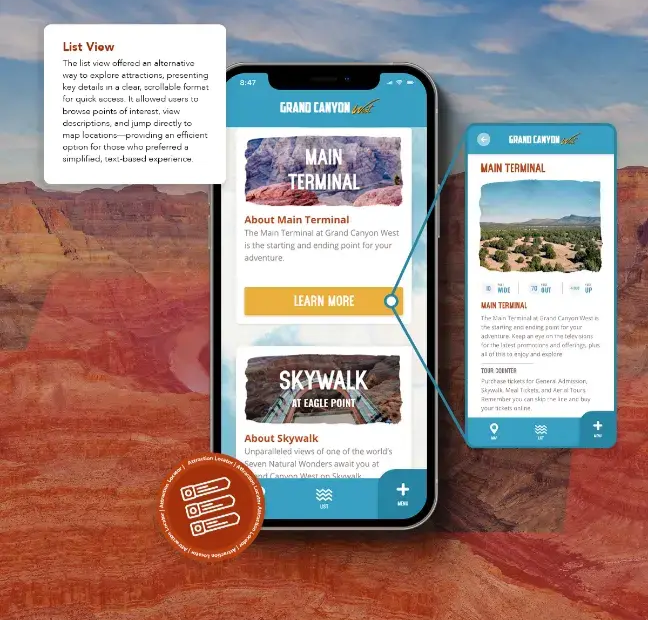
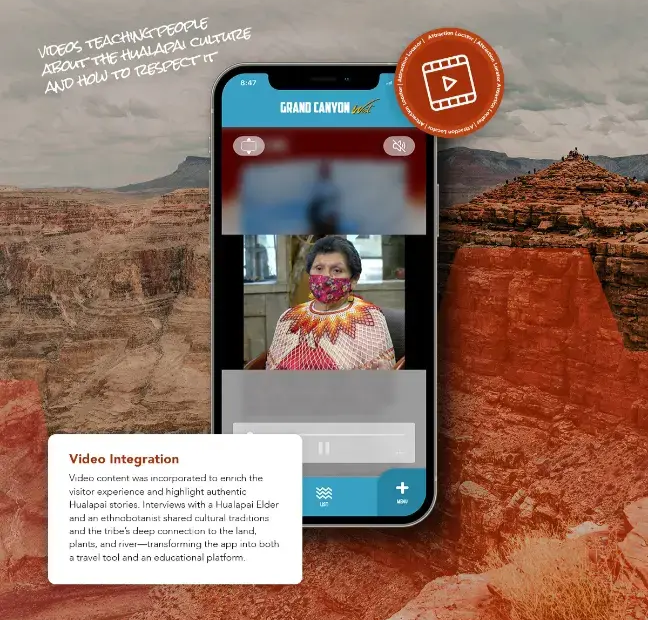
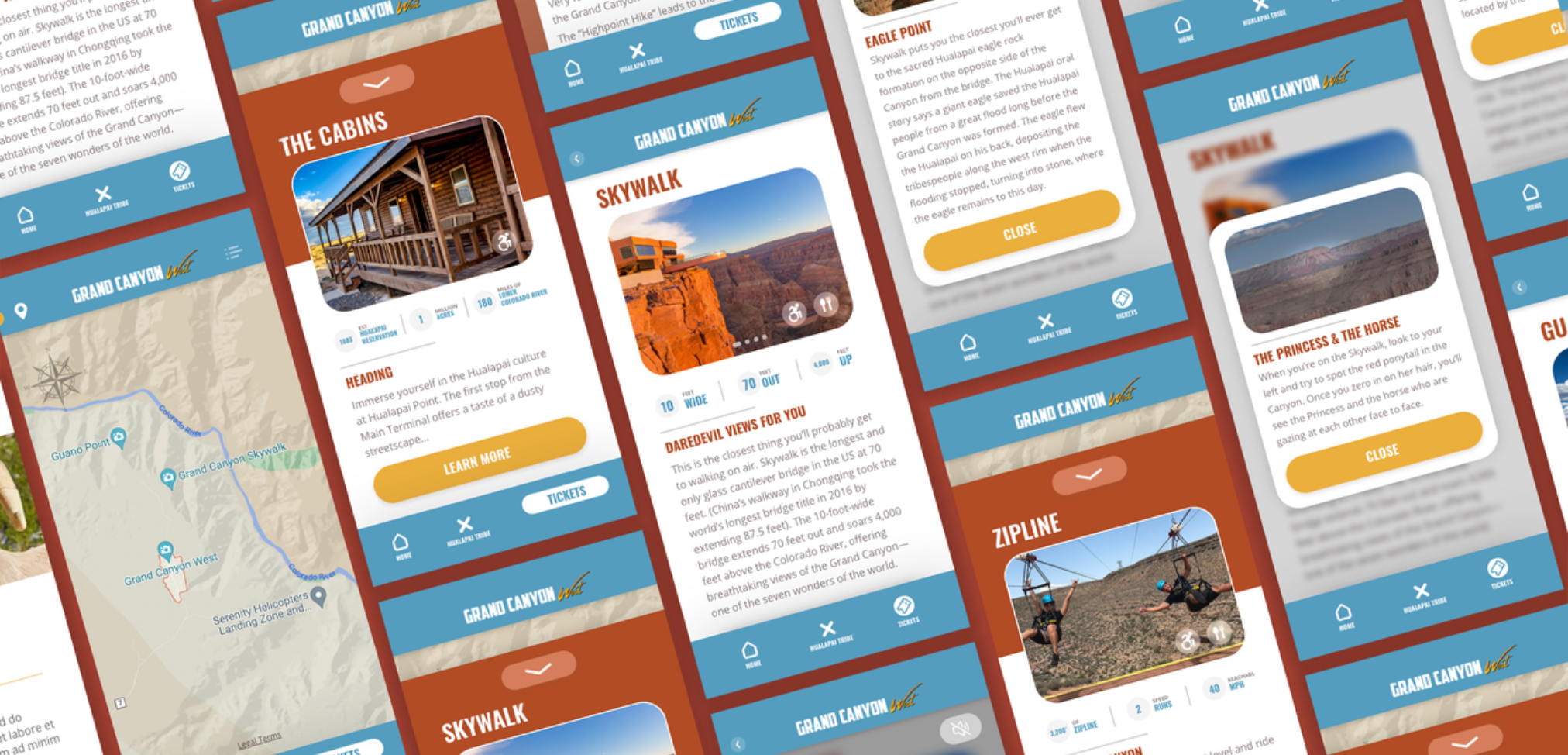
A mobile app concept designed to enhance the visitor experience at Grand Canyon West. The app helps travelers plan their trip, navigate the destination more easily, and access key information about attractions, ticketing, shuttle routes, and safety — all within one intuitive platform.

View final product ↓
Client
Grand Canyon West
Industry
Hospitality
Role
Art Director
Timeline
2023

The problem

Grand Canyon West (GCW) is home to the famous Skywalk, a horseshoe-shaped glass cantilever bridge that extends 70 feet from the Grand Canyon wall and allows visitors to see 4,000 feet down to the floor. It’s a bucket list destination that attracts millions of domestic and international travelers each year. Due to a remote location, and the fact its name is in close resemblance to Grand Canyon National Park that is about 3 hours away, there is brand confusion in the marketplace.

Making matters more challenging, it has three attractions (Eagle Point with the Skywalk, Hualapai Point with the Zipline, and Guano Point with the Highpoint Hike) that are spread out and require provided shuttle services. Moreover,  GCW is a tribal enterprise of the sovereign Indian Nation of the Hualapai Tribe, offering one-of-a-kind opportunities to interact with Indigenous peoples and learn about their culture and heritage. 
Background & goals

Grand Canyon West attracts visitors from around the world, but planning a visit and navigating the destination can feel overwhelming, especially with ticketing options, shuttle routes, varying attraction hours, and limited cell service in some areas.

The goal of this app concept was to create a visitor-friendly tool that consolidates the most important information into a clear, easy-to-use interface. The design focuses on helping guests prepare before they arrive and supporting them once on-site, making the overall experience more enjoyable, efficient, and safe.

Research → strategy

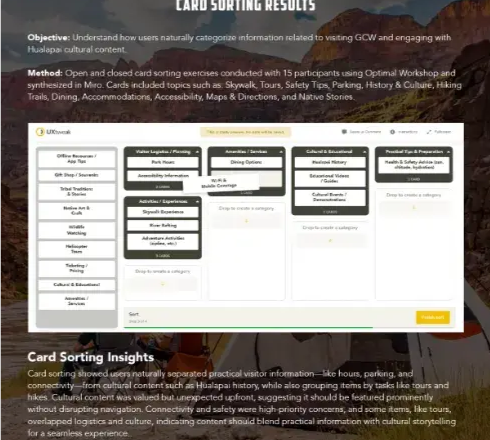
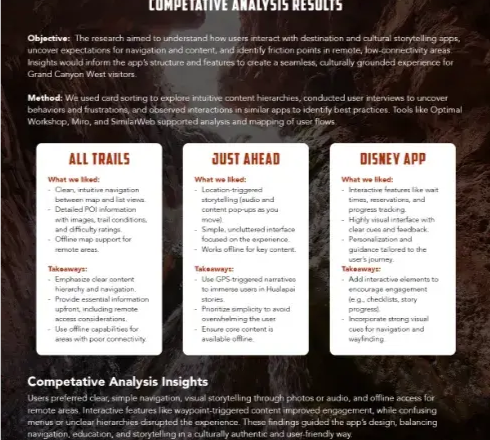
Research focused on both user needs and cultural storytelling. I partnered with our content and creative specialists to better understand the app’s target audience and collaborated with the client to ensure cultural accuracy in presenting Hualapai history. Using tools like Optimal Workshop, Miro, and SimilarWeb, I conducted card sorting, user interviews, and a competitive analysis of similar destination apps to identify best practices for navigation and information display.

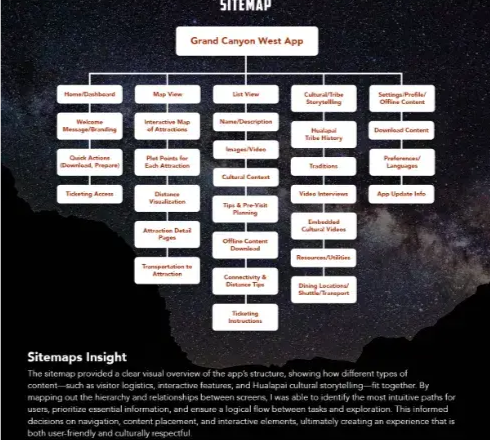
Insights from user behavior and expectations revealed that visitors often arrived unprepared for GCW’s remoteness and connectivity challenges. These findings directly informed the app’s structure, content organization, and interactive features—prioritizing navigation, education, and storytelling to create a more seamless and culturally grounded experience.

SITEMAP
CARD SORTING
COMPETATIVE ANALYSIS

Process

01
Research & Insight

I interviewed visitors, reviewed existing guest feedback, and audited the current digital experience to understand where confusion occurred before and during a visit. This research uncovered pain points around navigation, trip planning, and understanding what was available across the destination.

02
Experience Structure

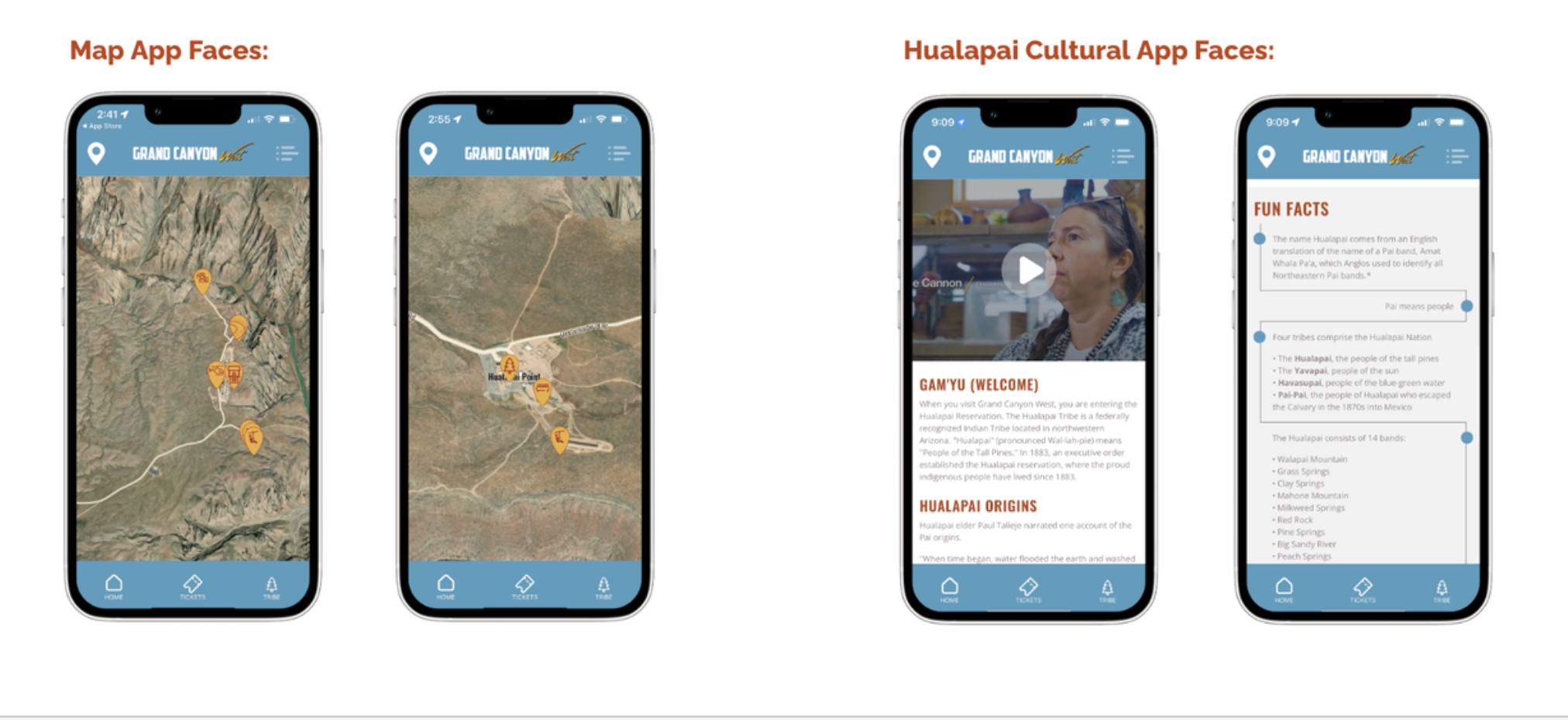
Using those insights, I developed the information architecture, user flows, and content hierarchy that would guide visitors through the app. Wireframes explored how planning, navigation, cultural storytelling, and attraction discovery could work together in a single experience.

03
Interface Design & System Design

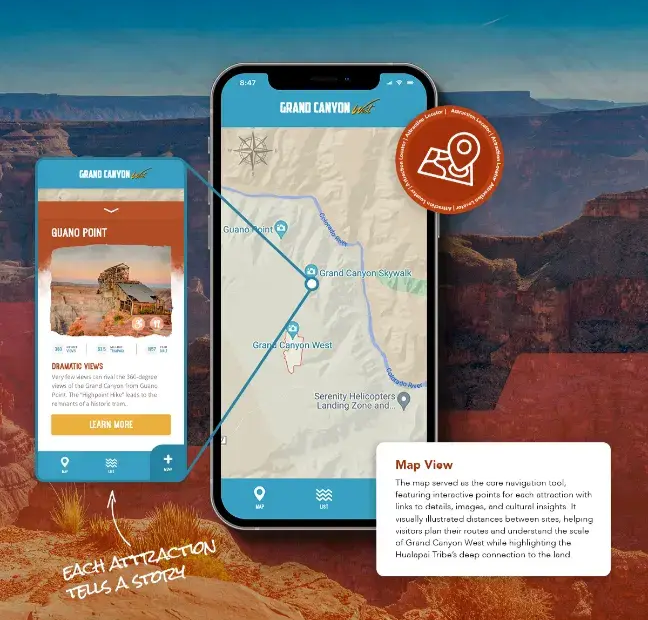
The visual design translated the Grand Canyon West brand into a mobile experience that felt approachable and easy to use. Components, interaction patterns, mapping, and educational content were built into a cohesive design system that could scale as the app expanded.

04
Prototype & Validation

Interactive prototypes were used to validate navigation, simplify key user journeys, and improve usability before finalizing the experience. The finished prototype demonstrated how visitors could confidently plan, explore, and learn throughout their trip.

The solution

DOWNLOAD THE APP

Results

50%DECREASE IN BOUNCE RATE
147%INCREASE IN YEAR-OVER-YEAR REVENUE INCREASE
198%INCREASE IN WEB USERS

Key takeaways

01

Designed for real world constraints by creating an experience that functions in a remote environment with limited service.

02

Made complex information approachable through thoughtful navigation, mapping, and content hierarchy.

03

Created meaningful cultural touchpoints that encouraged visitors to engage with Hualapai history throughout their visit.